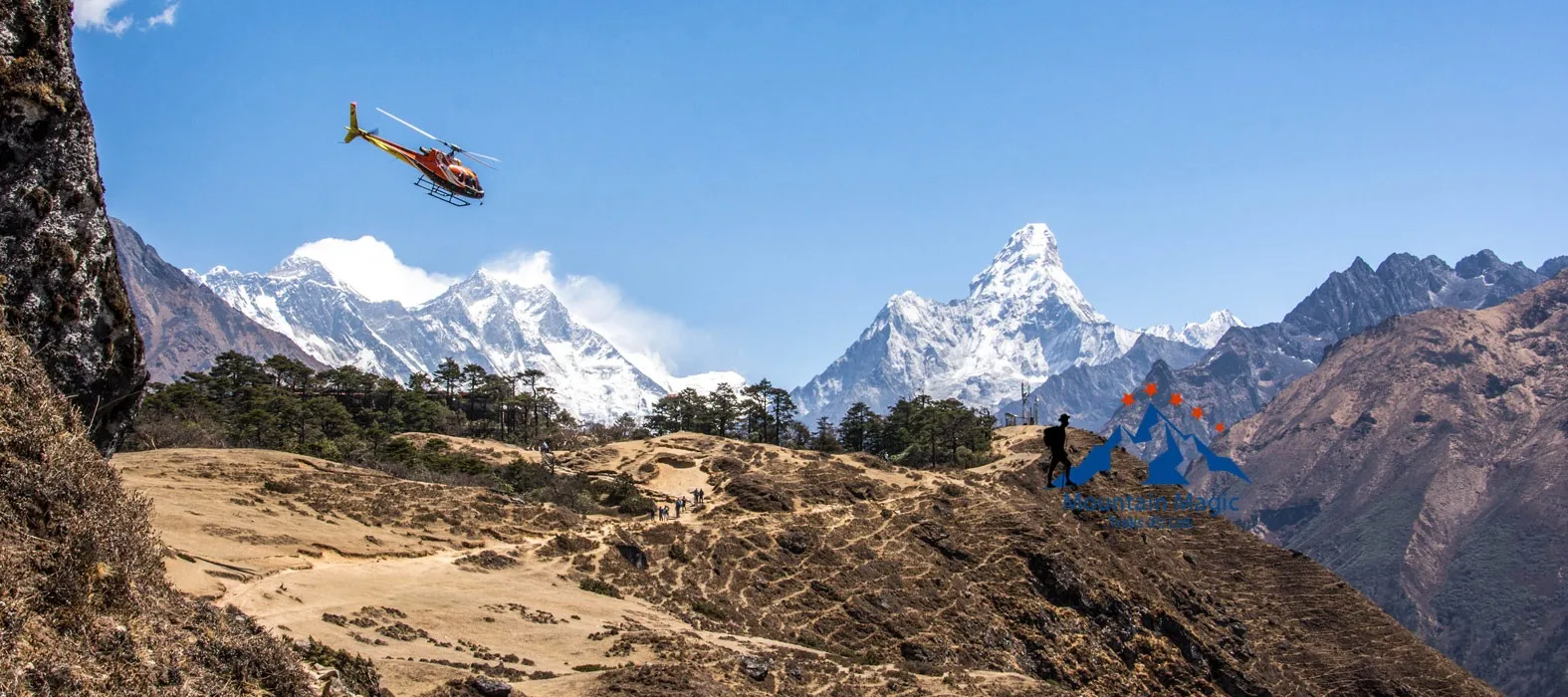
Some mountain trips are about reaching the finish as quickly as possible. Everest is different.
The trail toward Base Camp passes through villages, forests, rivers, monasteries, rocky valleys, and high mountain landscapes. Every section has something different to offer.
The Everest Base Camp Trek With Helicopter Return gives travelers the chance to experience this route on foot and then return through the mountains by helicopter. That combination can save time, but it should not make you rush through the trekking days.
A slower approach often leads to a better experience.
Start With a Comfortable Walking Rhythm
The first days can feel exciting because everything is new.
Lukla, the trail, suspension bridges, mountain villages, and distant peaks may make you want to keep moving and see everything at once.
Do Not Spend Your Energy Too Early
The trek becomes harder as you gain altitude.
Use the first few days to find a walking pace that feels natural. Take short breaks instead of waiting until you are completely exhausted.
A comfortable rhythm will help you later when the trail becomes steeper and the air gets thinner.
Give the Lower Valleys Your Attention
The route around Lukla and Phakding looks very different from the landscape near Everest Base Camp.
There are green hills, forests, streams, farms, and rivers.
Enjoy the Green Landscape
It is easy to focus only on Everest because that is the main goal.
But the lower Khumbu has its own beauty.
Watch the river below the trail. Look at the stone walls around fields. Notice the small houses and prayer flags.
These details disappear as you move higher.
Treat Namche as More Than an Overnight Stop
Namche Bazaar is one of the most important places on the Everest route.
It is also where acclimatization becomes a serious part of the journey.
Use Your Extra Time Well
Instead of spending the entire acclimatization day inside your lodge, take a gentle walk around the area.
You can explore the village, enjoy the mountain views, or learn more about local life.
But do not turn the day into a hard workout.
The purpose is to prepare your body for higher elevations.
Watch the Trail Change After Namche
After Namche, the route gradually becomes more rugged.
You may still walk through forested sections, but the scenery slowly opens up.
Large peaks become more visible, and the trail begins to feel more remote.
Look for the Small Signs of Change
The trees become shorter and less common.
The air feels cooler.
The valleys become wider.
The mountains appear much closer.
These changes happen slowly, which makes them easy to overlook.
Paying attention makes the trek feel like a journey through several different environments.
Spend Time Understanding Tengboche
Tengboche is known for its Buddhist monastery and mountain setting.
It is one of the places where the cultural side of the Everest region becomes especially noticeable.
Respect the Local Traditions
If you visit the monastery, remember that it is an active religious place.
Keep your voice low and follow local instructions.
Do not photograph ceremonies or people without permission.
You are visiting someone else’s community.
A respectful attitude makes the experience better for everyone.
Expect Dingboche to Feel Different
Dingboche sits at a much higher elevation than Namche.
By this stage, your body may notice the altitude more clearly.
Walking uphill can feel harder, even if the distance does not seem very long.
Let Your Body Set the Pace
Do not compare yourself with other trekkers.
Some people adjust quickly.
Others need more time.
Walk slowly when necessary and tell your guide if you feel unwell.
The goal is not to prove that you are the strongest person in the group.
The goal is to complete the journey safely.
Use the Acclimatization Day Properly
Dingboche includes another acclimatization day before the route moves higher.
This gives you time to adjust while still enjoying the mountain surroundings.
Short Activity Is Enough
A gentle hike can be useful.
You can gain some extra elevation during the day and then return to Dingboche to sleep.
Do not try to turn the acclimatization hike into a personal record.
Rest, food, water, and sleep are just as important.
Prepare for the Rocky High Country
After Dingboche, the landscape becomes much more exposed.
There are fewer trees and more rocks, glaciers, and high mountain slopes.
Watch Your Footing
The trail can be uneven.
Loose rocks and rough surfaces require attention, especially when you are tired.
Look at the mountains when you stop.
While walking, focus on where you place your feet.
This simple habit can make the trail safer and more comfortable.
Make Lobuche a Moment of Reflection
Lobuche is one of the final major stops before Gorakshep.
The surroundings are stark compared with the green hills near Lukla.
The Thukla area also contains memorials dedicated to climbers who lost their lives in the Everest region.
Remember That These Mountains Demand Respect
The memorials are a reminder that the Himalayas are not simply a beautiful tourist destination.
Conditions can be severe.
Altitude, cold, weather, and difficult terrain all create real challenges.
Take a quiet moment at the memorials before continuing toward the higher sections.
Keep the Final Approach Simple
Gorakshep is the last major base before Everest Base Camp.
At this elevation, you may feel tired even when performing simple tasks.
Carry Only What You Need
For the Base Camp walk, avoid carrying unnecessary weight.
A small daypack can hold:
-
Water
-
Snacks
-
Warm layers
-
Sunglasses
-
Sunscreen
-
Camera
-
Personal essentials
A lighter bag means less work for your body during a demanding day.
Let Base Camp Be More Than a Photograph
Reaching Everest Base Camp is an important moment.
But after several days of walking, you may be tempted to take a few pictures and immediately think about the next step.
Stop Before You Move On
Look around.
The Khumbu Icefall and surrounding mountains create a landscape that is difficult to understand from photographs alone.
Think about how far you have come.
You started among green valleys and have now reached one of the highest trekking areas in the world.
That is worth taking a moment to appreciate.
See Everest From Kala Patthar
Kala Patthar offers another major highlight.
At approximately 5,545 meters, it provides wide views toward Everest and several surrounding peaks.
Give Yourself Time at the Viewpoint
The early morning climb can be cold.
But the changing sunlight can transform the mountains in a matter of minutes.
Take a few photographs.
Then put the camera away.
Watch the peaks.
The view will not last forever.
Experience the Return From a New Angle
After completing the trekking section, the helicopter return changes the pace completely.
The Everest Base Camp Trek With Helicopter Return allows you to experience the same region from the air after spending days walking through it.
See How Much Ground You Covered
From the trail, a valley may take hours to cross.
From the helicopter, it passes beneath you quickly.
Villages look small.
Trails become narrow lines.
Glaciers, rivers, ridges, and mountain slopes appear together.
This final view can help you understand the scale of the entire adventure.
Leave Space for Weather Changes
Helicopter flights depend on safe mountain conditions.
Clouds, wind, and visibility can affect operations.
Do Not Build a Tight Schedule
If you have an important flight from Kathmandu, leave enough time between the helicopter journey and your departure.
A little flexibility can prevent a lot of stress.
Mountain travel rewards patience.
Let the Journey Be the Achievement
The Everest Base Camp Trek With Helicopter Return is not only about reaching one famous location.
It is about watching the landscape change, meeting people along the trail, adjusting to altitude, and discovering how different life can feel in the Himalayas.
The helicopter return adds another perspective without taking away the walking experience.
You earn the journey step by step.
Then you get to see it from above.
The Best Memories May Be Unexpected
You may remember the first suspension bridge more clearly than expected.
You may remember a quiet morning in Namche.
You may remember a warm meal after a cold walk.
You may remember the silence around Lobuche.
Or you may remember seeing the trail from the helicopter after spending days walking across it.
That is the beauty of the journey.
The destination matters, but the experiences between the starting point and Everest Base Camp are what give the adventure its character.
FAQs
Is the trek only about reaching Everest Base Camp?
No. The route includes villages, monasteries, acclimatization stops, mountain viewpoints, and changing landscapes.
Why is Namche important?
Namche is a major settlement and an important acclimatization stop before the trail climbs higher.
What happens at Dingboche?
Dingboche provides another acclimatization period before continuing toward the higher sections of the route.
Is Kala Patthar higher than Everest Base Camp?
Yes. Kala Patthar is listed at approximately 5,545 meters, while Everest Base Camp is around 5,364 meters.
Does the helicopter return remove the difficult trekking?
No. You still complete the main trek toward Base Camp and Kala Patthar. The helicopter mainly replaces the long return journey.
Can weather affect the return flight?
Yes. Mountain weather can change quickly, so some flexibility should be kept in the travel schedule.
